

GenAI adoption and security risks in manufacturing: Balancing innovation and safety
GenAI adoption and security risks in manufacturing are reshaping factory floors and business models fast. Because manufacturers race to deploy generative AI, new threat vectors appear across cloud services and agents. However, governance and security controls often lag behind innovation, exposing regulated data and IP.
Adoption rates for tools like ChatGPT, Google Gemini, and Copilot drive productivity gains. In addition, many teams use personal accounts and unsanctioned cloud apps, increasing data exposure. Therefore, attackers exploit trusted services to deliver malware and harvest credentials.
This introduction outlines the risks, governance priorities, and technical controls that reduce attack surface. We will cover data loss prevention, HTTP and HTTPS inspection, and remote browser isolation. As a result, security teams can enable AI safely while protecting IP and regulated information.
Read on to learn actionable steps and governance models tailored for manufacturing operations. This guidance helps balance innovation with risk management and cloud security best practices. Finally, the article offers checklists and controls you can adopt immediately.
Benefits and opportunities of GenAI adoption and security risks in manufacturing
Generative AI offers clear value for manufacturers because it accelerates decision making and automates routine tasks. As a result, teams can shorten design cycles and speed product development. However, organizations must pair these gains with strong governance.
In addition, many GenAI tools integrate with cloud platforms and enterprise apps, offering seamless workflows. For example, Microsoft 365 Copilot embeds AI into office tasks, improving collaboration and documentation Microsoft 365 Copilot. Therefore, firms that adopt responsibly can outpace competitors.
Key opportunities include
- Increased production efficiency: GenAI optimizes schedules and line balancing to boost throughput and reduce waste.
- Predictive maintenance: AI models forecast failures, so maintenance becomes proactive rather than reactive.
- Innovation advancement: Generative models speed design prototyping, creative problem solving, and new product ideation.
- Quality improvement: AI detects defects earlier using image analysis and sensor fusion.
- Workforce augmentation: GenAI assists operators with real time guidance, reducing errors and training time.
- Supply chain resilience: AI improves demand forecasting and supplier risk scoring, lowering stockouts and delays.
- Cost reduction: Automation of documentation and planning frees resources for high value tasks.
Adoption is widespread, with tools like ChatGPT and Google Gemini powering experiments and pilots. In addition, many teams connect to APIs for custom agents, increasing integration speed Google. Therefore, manufacturers gain scale fast but must secure data flows.
Security teams should review threat research and controls in parallel. Netskope publishes threat trends and mitigation advice Netskope. As a result, organizations can capture GenAI benefits while reducing exposure to data loss and malware.
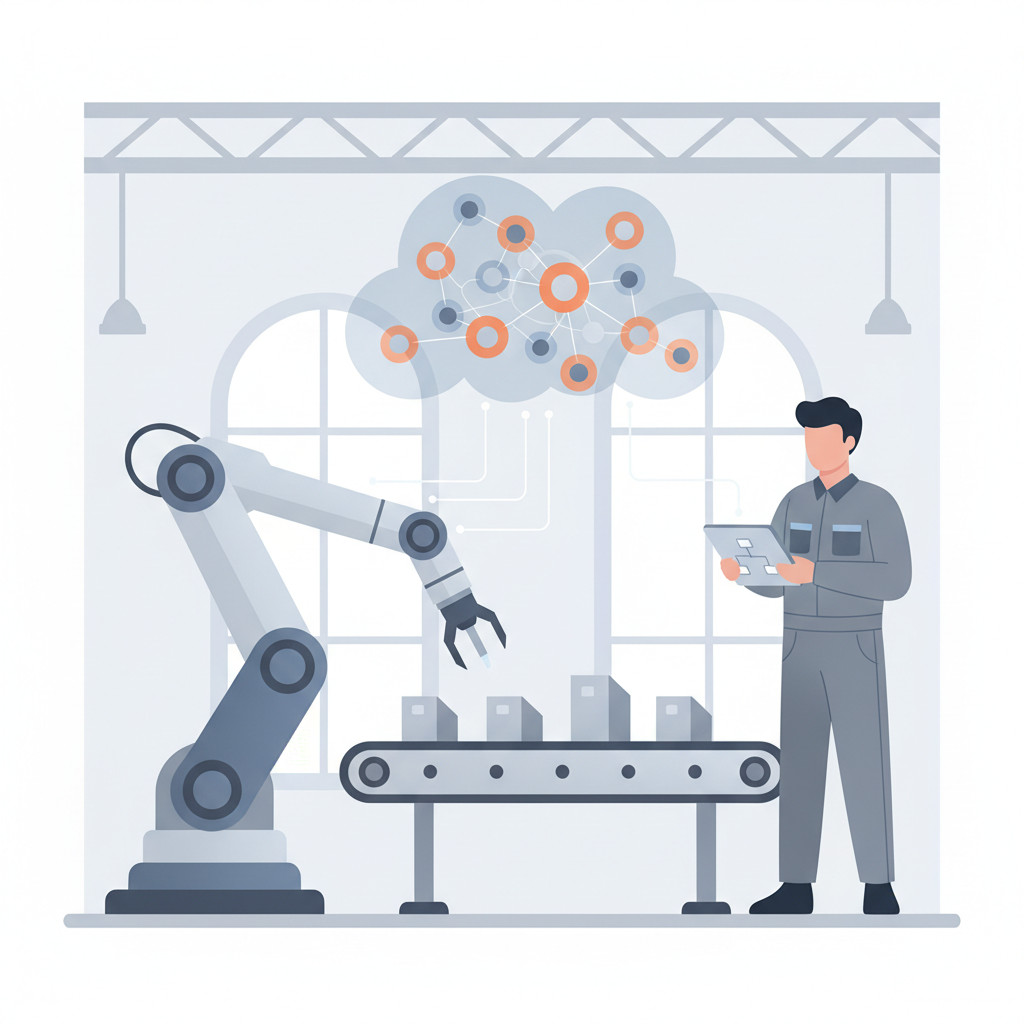
GenAI adoption and security risks in manufacturing: Threats to data, IP and operations
Generative AI expands the attack surface in manufacturing. Because teams connect models to cloud storage and APIs, attackers gain more entry points. As a result, data breaches and operational disruption become real business risks.
Major risk categories
- Data exfiltration and leaks: Unvetted prompts and personal genAI accounts can send regulated data to external models. For instance, analysis shows regulated data accounts for 29 percent of exposure incidents in genAI apps, while source code accounts for 28 percent and passwords or API keys for 26 percent. Therefore, sensitive files can end up in third party training pipelines.
- Intellectual property theft: Generative models can memorize and regenerate proprietary designs. As a result, leaked blueprints or source code can damage competitive advantage.
- Malware delivery via trusted services: Threat actors hide malicious payloads in files on familiar cloud platforms. Netskope’s research highlights that Microsoft OneDrive, GitHub, and Google Drive deliver malware downloads to organizations monthly. See Netskope for details.
- Model misuse and prompt injection: Adversaries manipulate prompts to change agent behavior. Consequently, automated systems may perform unsafe actions or reveal secrets.
- Operational disruption: Poisoned training data or faulty model guidance can misroute workflows. Therefore, production lines could pause or produce defects when AI gives incorrect instructions.
Evidence and examples
- Widespread adoption increases exposure: Ninety four percent of manufacturers use genAI directly, and many connect to public APIs. As a result, a single compromised API key can affect internal tools.
- Cloud platforms as vectors: Google Drive appears in 98 percent of monitored manufacturing environments, and OneDrive shows high malware download rates. These trusted platforms amplify risk if controls are weak.
- Real world incidents: Monthly rates show 22 malicious content events per 10,000 users. Therefore, even low per user rates scale into frequent incidents across large workforces.
Mitigation must start early and run in parallel with adoption. For practical guidance, consult vendor security guidance such as Microsoft’s security documentation and Netskope threat reports.
Mitigation strategies for GenAI adoption and security risks in manufacturing
This table compares mitigation strategies for GenAI adoption and security risks in manufacturing. Therefore, use it as a quick reference when planning controls.
| Strategy | Description | Effectiveness |
|---|---|---|
| Data encryption at rest and in transit | Encrypt models, API keys and stored files to limit unauthorized access | High |
| Data loss prevention (DLP) | Apply DLP to block regulated data from leaving sanctioned systems | High |
| Employee training and awareness | Train staff on safe prompts, phishing and sanctioned tool use | Medium-High |
| Regular security audits and compliance checks | Audit model access, logs and datasets on a scheduled basis | High |
| AI monitoring and anomaly detection | Monitor model outputs and agent behavior for malicious patterns | High |
| HTTP and HTTPS download inspection | Inspect downloads to stop malware hidden in trusted platforms | Medium-High |
| Remote browser isolation and app blocking | Isolate risky web apps and block tools with no business value | High |
Conclusion
GenAI adoption and security risks in manufacturing demand a balanced approach. Manufacturers gain efficiency, predictive maintenance, and faster design cycles. However, these gains bring data exposure, IP risk, and operational threats.
Effective controls include DLP, encryption, remote browser isolation, and auditing. In addition, employee training and AI monitoring reduce misuse and prompt injection. Security teams should inspect HTTP and HTTPS downloads for hidden malware. As a result, organizations can scale AI while lowering attack surface.
Velocity Plugins helps businesses extend AI safely. In particular, Velocity Chat offers an advanced AI chatbot for e-commerce and conversion optimization. It supports personalized customer journeys while integrating responsibly with back-end systems. Therefore, firms can explore customer-facing AI without compromising core operational security.
Start with governance, then deploy controls alongside pilots. Finally, treat security as a feature, not an afterthought. Adopt this mindset to capture GenAI benefits while protecting IP and regulated data. GenAI adoption and security risks in manufacturing require this shift.
Frequently Asked Questions (FAQs)
What are the biggest security risks from GenAI adoption in manufacturing?
Generative AI introduces several key risks. Data exfiltration and leaks occur when users send regulated files to public models. Intellectual property theft can happen if models memorize proprietary designs. Malware spreads through trusted cloud services and attachments. Prompt injection and model misuse can make agents reveal secrets or act unsafely. Operational disruption may follow from poisoned training data or bad guidance.
How widespread is GenAI use in manufacturing and why does that matter?
Adoption is high across the sector, which raises exposure. Many teams now connect to public APIs and cloud platforms. Therefore a single compromised credential can affect internal tooling and agents.
What immediate steps should security teams take?
Inventory AI tools and data flows. Apply data loss prevention and encryption. Inspect HTTP and HTTPS downloads to stop hidden malware. Deploy remote browser isolation and block apps with no business use. Train staff on safe prompts and phishing. Regularly audit model access and logs.
Can GenAI be used safely for design and maintenance?
Yes, when organizations sanitize datasets, use private deployments, and enforce access controls. In addition, monitor outputs and limit model training on sensitive assets.
How do I balance innovation and risk?
Start with governance and pilot projects. Iterate controls with each rollout and measure security metrics. Finally treat security as a product feature, not an afterthought.


