

Threat Actors Turn to AI to Target Manufacturing
That shift raises the stakes for factories and supply chains worldwide. Cybercriminals now use generative models to craft convincing phishing, find vulnerable APIs, and weaponize leaked code. Therefore, manufacturers face faster, more automated attacks than before.
Because industrial control systems run legacy software, production risks increase when attackers adapt AI tactics. Consequently, data leakage and intellectual property theft can halt lines and cost millions. Moreover, attackers exploit popular cloud tools like file shares and code repos to move laterally.
This article sounds an urgent alarm while offering practical guidance. First, we will examine how threat actors weaponize genAI and cloud services. Then we will explain defenses that protect data, models, and operations without stifling innovation. Finally, readers will learn actionable steps for risk reduction and governance.
Read on to understand the changing threat landscape, and prepare your teams to balance productivity with protection.
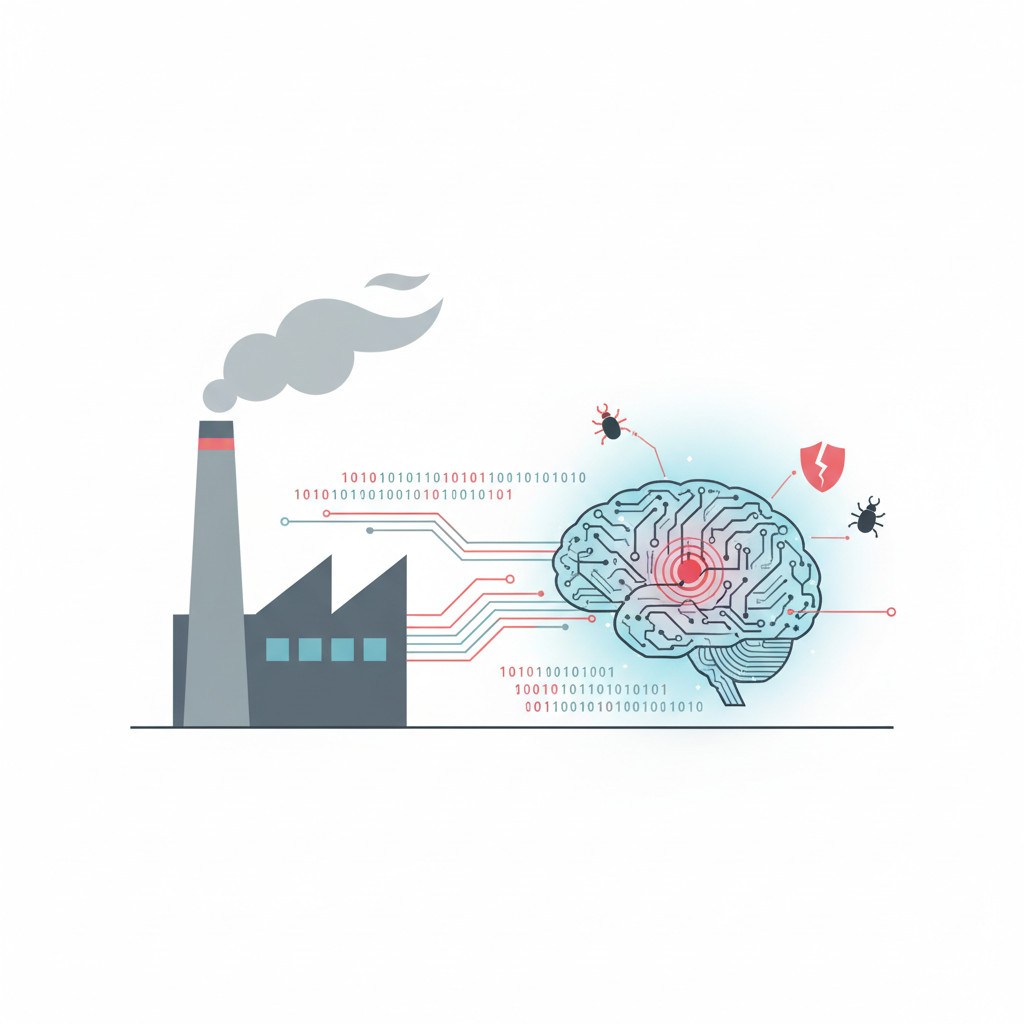
How Threat Actors Turn to AI to Target Manufacturing
Threat Actors Turn to AI to Target Manufacturing by automating and scaling attacks that once required human skill. Attackers now use generative models to craft believable lures, mimic executives, and write exploit code. Because manufacturing environments mix legacy industrial control systems with modern cloud services, attackers find many entry points.
Below are the main AI-driven tactics seen in manufacturing attacks. Each example shows how generative AI, automation, and data harvesting increase risk.
- Automated phishing and spearphishing
- Attackers use genAI to generate tailored emails and messages quickly. As a result, phishing becomes cheaper and more convincing. For example, deepfake voice clips support social engineering against plant operators.
- AI-driven malware and exploit generation
- Threat actors use models to write obfuscated malware payloads and polymorphic code. Consequently, detection tools struggle because signatures change fast.
- Predictive reconnaissance and attack patterning
- Adversaries analyze public data and sensor telemetry to predict maintenance windows and weak moments. Therefore, they time intrusions to disrupt production.
- Model poisoning and data manipulation
- Malicious inputs can corrupt internal models or training data, reducing trust in AI-driven decisions and control loops.
- Automated vulnerability discovery and API abuse
- AI speeds scanning for vulnerable APIs and exposed credentials, including integrations with api.openai.com and cloud storage. Meanwhile, cloud file shares and repos become staging grounds for lateral movement.
For defenders, frameworks such as MITRE ATT&CK help map techniques: MITRE ATT&CK. Also, follow NIST guidance for industrial control security: NIST Guidance. Finally, learn cloud threat patterns from vendors like Netskope: Netskope.
Understanding these tactics helps teams prioritize defenses without stalling innovation.
| Threat Type | Description | Detection Complexity | Impact |
|---|---|---|---|
| Phishing | Traditional: mass email lures and generic scams. AI driven: hyper targeted spearphish using generative text and voice deepfakes. | Traditional: low to medium. AI driven: medium to high because content is more realistic. | Traditional: credential theft and disruption. AI driven: faster credential compromise and wider lateral movement. |
| Malware | Traditional: signature based malware and ransomware. AI driven: polymorphic malware and auto generated payloads. | Traditional: medium detection complexity. AI driven: high because signatures fail. | Traditional: system downtime and data loss. AI driven: targeted operational disruption and stealthy persistence. |
| Reconnaissance | Traditional: manual scanning and info gathering. AI driven: predictive analysis from telemetry and public data. | Traditional: low to medium. AI driven: high because models reveal timing and weak points. | Traditional: opportunistic attacks. AI driven: timed attacks that maximize production impact. |
| Data and Model Attacks | Traditional: data theft and tampering. AI driven: model poisoning and data manipulation that alters control decisions. | Traditional: medium detection. AI driven: very high since model drift looks like normal variance. | Traditional: IP loss and compliance fines. AI driven: unsafe control actions and production failures. |
| Supply Chain and API Abuse | Traditional: compromised vendors and software updates. AI driven: automated API discovery and credential abuse across cloud services. | Traditional: medium. AI driven: high due to scale and speed. | Traditional: downtime and trust loss. AI driven: rapid spread and cross system contamination. |
Impacts of AI-Driven Threats on Manufacturing
When Threat Actors Turn to AI to Target Manufacturing the fallout is immediate and painful. Production lines can stop without warning, valuable designs can leak, and trust erodes across the supply chain. Therefore leaders face harsh trade offs between speed and safety, and workers fear the real world consequences.
- Production downtime and operational chaos
- Attacks that exploit predictive patterns can halt assembly lines at peak demand. As a result, lost output and missed contracts cascade into revenue shortfalls and frantic recovery work.
- Intellectual property theft and competitive harm
- AI helps attackers find and exfiltrate blueprints and process recipes quickly. Consequently stolen IP fuels copycat rivals and long term strategic loss for manufacturers.
- Rapidly rising costs and financial strain
- Remediation requires emergency patches, forensic teams, and overtime. Therefore insurance costs rise and margins shrink across affected plants and partners.
- Safety risks to people and equipment
- Manipulated control signals can cause unsafe machine behavior and near misses. In addition compromised models may issue unsafe instructions that put operators at risk.
- Regulatory penalties and reputational damage
- Data exposures trigger compliance fines and contract breaches. Meanwhile customers and partners may withdraw, leaving reputational wounds that take years to heal.
These impacts show why Threat Actors Turn to AI to Target Manufacturing must not be dismissed. To reduce harm manufacturers must act fast, prioritize defenses, and align security with innovation goals. For technical mapping use MITRE ATT&CK at MITRE ATT&CK and for industrial guidance see NIST.
Conclusion: Threat Actors Turn to AI to Target Manufacturing
Threat Actors Turn to AI to Target Manufacturing and the danger is real and growing. Attackers now move faster and scale attacks with automation. As a result, manufacturers face more frequent and more subtle intrusions. Therefore leaders cannot wait to act.
Impacts are severe. Downtime, lost designs, and safety failures hit the bottom line. Moreover remediation costs and fines pile up quickly. Because supply chains connect, one breach spreads pain to partners.
Defend with layered controls and clear governance. Start with data loss prevention and HTTP and HTTPS download inspection. Use remote browser isolation when visiting high risk sites. Also block apps that serve no business purpose and monitor cloud integrations.
Velocity Plugins shows how AI can help businesses safely. Their AI driven WooCommerce plugins improve service and protect data. In particular Velocity Chat automates support while enforcing privacy and security guardrails. Therefore their work models positive AI use for operations and security.
Act now to balance innovation and protection before attackers exploit AI at scale.
Frequently Asked Questions (FAQs)
What are AI-driven threats in manufacturing?
AI-driven threats use machine learning to scale attacks and evade detection. Attackers use generative models for tailored phishing and automated malware. They analyze sensor telemetry and public data to time intrusions and poison models. Because these attacks mimic normal operations, detection grows harder and organizations must speed incident response.
How do attackers use AI to target manufacturing systems?
Threat actors automate reconnaissance across cloud services and APIs to find weak points. They craft hyper-real spearphish and deepfake audio to trick operators and admins. They also generate polymorphic malware and auto write exploits that change signatures. As a result attackers move faster and hide persistence inside cloud storage and models.
How can manufacturers protect themselves effectively?
Adopt layered defenses including data loss prevention and HTTP and HTTPS download inspection. Use remote browser isolation for high risk sites and block non-business apps. Enforce least privilege and monitor API usage such as api.openai.com. Train staff in phishing resistance and run routine audits of cloud shares and code repositories.
Can AI be used to defend against AI-driven attacks?
Yes. Defensive AI detects anomalies, correlates telemetry, and helps prioritize alerts. It accelerates triage and can automate containment steps. However defenders must tune models and combine automation with human review. Therefore balance AI tooling with clear policies and governance.
Should manufacturers halt AI adoption to reduce risk?
No. Pausing AI stops productivity gains and harms competitiveness. Instead adopt secure-by-design practices and approved platforms. Implement model governance, vendor controls, and strict data policies. As a result organizations can innovate while reducing opportunities for threat actors to exploit AI.


